
The Labor Movement hasn’t always been inclusive, yet the Black community has, and continues to lead the way for worker rights. In recognition of Black History Month, please take some time to learn about Black labor leaders past and present.
To learn more about these great leaders, read this article from the NEA, 5 Black Leaders that Shaped the Labor Movement.
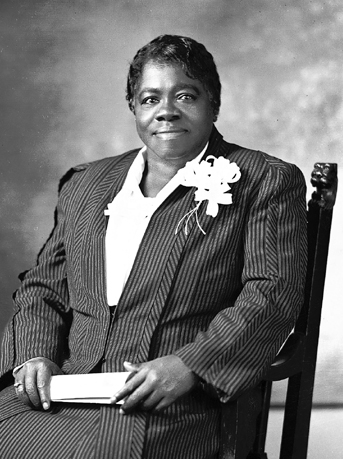
Mary McLeod Bethune
(1875 – 1955)
“I leave you a thirst for education. I leave you a respect for the use of power. I leave you faith. I leave you racial dignity. I leave you a desire to live harmoniously with your fellow men. I leave you, finally, a responsibility to our young people.”
– Mary McLeod Bethune
Mary McLeod Bethune went from being born to parents who had been enslaved to starting a school for Black girls in Florida in 1904. She was elected as the first woman president of the national Association of Teachers in Colored Schools (NATCS, later known as the American Teachers Association), which later merged with the NEA (National Education Association). In the 1930’s President Franklin D. Roosevelt appointed her as the director of African American Affairs.
Source
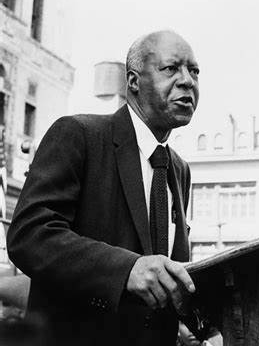
A. Philip Randolph
(1889 – 1979)
“Freedom is never granted: It is won. Justice is never given: It is exacted. Freedom and justice must be struggled for by the oppressed of all lands and races.”
– A. Philip Randolph
Randolph worked with the black workers of the Chicago-based Pullman Palace Car Company organizing the Brotherhood of Sleeping Car Porters. When this was recognized as a Union in 1937, it became the first predominately Black labor union in the country. He helped lead the fight against discrimination in the defense industry and military, resulting in Executive Order 8802, the Fair Employment Practices Commission, and the desegregation of the armed services. He served as one of the first two Black vice presidents of the AFL-CIO in the 1950’s and was the founder of the Negro American Labor Council.
Source
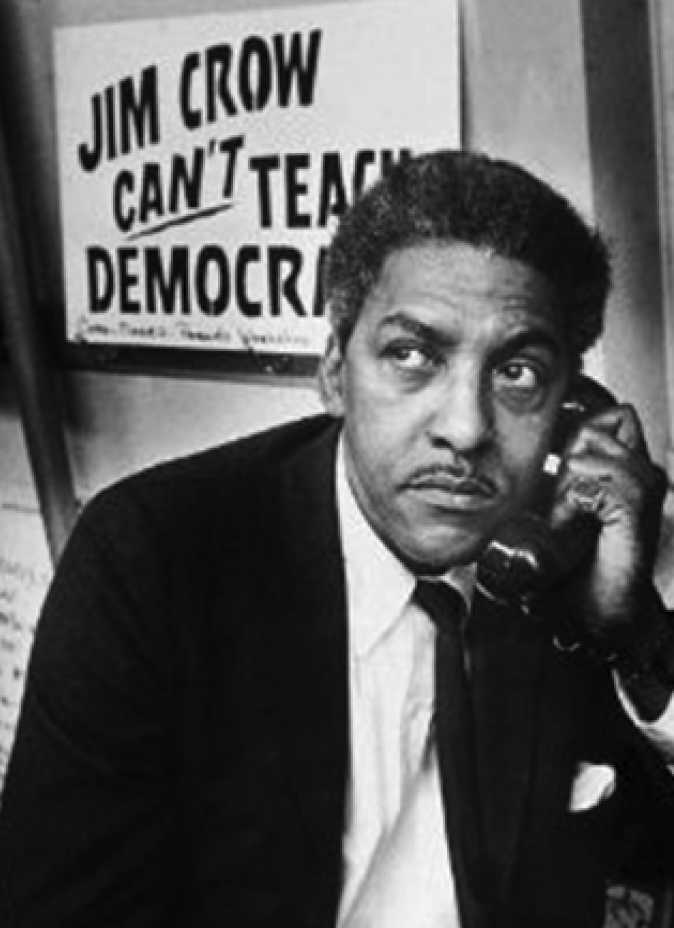
Bayard Rustin
(1912 – 1987)
“We are all one. And if we don’t know it, we will learn it the hard way.”
– Bayard Rustin
Rustin played many pivotal roles in the fight against racism and the struggle for economic and social justice. He was a member of the executive council of the AFL-CIO and founder of the A. Philip Randolph Institute. Not only did he fight for worker empowerment, he also combatted colonialism in India, Ghana, Nigeria, and South Africa, worked for nuclear disarmament, helped lead the 1963 March on Washington, fought for LGBTQ+ rights, and so much more. Rustin, a gay, Black man, was often forgotten behind the scenes of the civil rights movements. LGBTQ+ history IS Black history!
Source
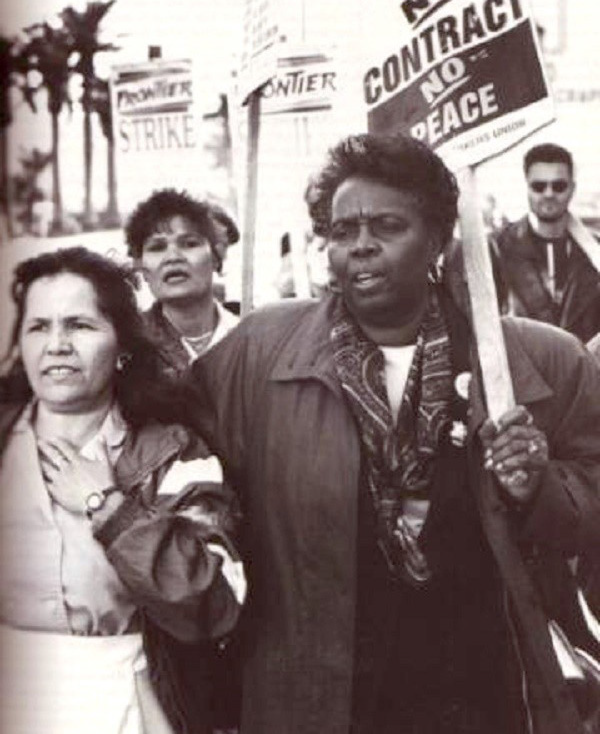
Hattie Canty
(1933 – 2012)
“Anytime I fight for anything in this labor movement, it benefits me in the civil rights movement.”
– Hattie Canty
Canty saw right away that the labor movement and the struggle for racial justice were intrinsically linked. She was elected to the executive board of her union, the Culinary Workers Union (CWU) in 1984 and became the president in 1990, the first Black woman and room attendant to be elected into this position.
She founded the Culinary Training Academy, which specifically supports people of color to grow their skills and obtain better hospitality jobs. Canty led the CWU through six and a half years of negotiations for better labor standards! This was the longest strike in U.S. labor history!
Source
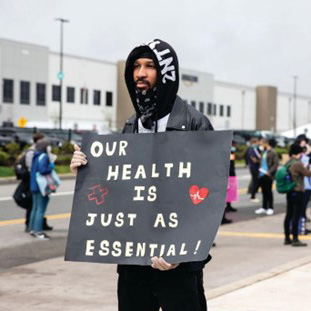
Chris Smalls
(1988 – present)
“We don’t need millions of dollars. We just need the peoples’ power and the power of the community behind us.”
– Chris Smalls
If you recall the labor movement news around Amazon worker rights, you’ll have heard the name “Chris Smalls”. Similar to the experiences of many Amazon employees, Chris worked with grueling work expectations and witnessed institutionalized racism prevent him and others from growing in their careers.
Many in the labor force were shocked to see Fortune 500 companies prioritize profit over lives and the safety of their employees during the COVID-19 pandemic. This was the tipping point for Chris, who began leading actions for Amazon worker rights in March 2020, alongside his colleague Derrick Palmer. Many thought David would not succeed against Goliath, but the workforce at the Amazon Staten Island warehouse JFK8 voted to establish a union! Smalls began calling their labor organization the Amazon Labor Union (ALU) in April 2021.
Source